After decades in healthcare IT, most “solutions” still act like toolkits. Here’s why that model fails — and what real interoperability should look like.
Apr 24, 2026
Are Most Interoperability Tools a Scam?
A note from the founder
After 30 years in healthcare IT, too many “interoperability solutions” are still toolkits wearing a solution’s costume. It’s time someone actually fixed the car.
By Joerg Schwarz · VP of Sales & Growth · 7 min read
Let’s be real — are most interoperability tools a scam?
I’ve been in healthcare IT for over 30 years, and too many “interoperability solutions” are just toolkits wearing a solution’s costume.
Imagine driving into a repair shop with your check engine light on, and the manager says:
Sure, we can help. Here’s an open bay, here’s the lift, here are the tools. You figure out what’s broken and fix it yourself. That’ll be $XXX,XXX for the privilege.
That’s exactly how most interoperability “solutions” work.
You buy the toolkit. You learn the tools. You do the work. And you keep paying.
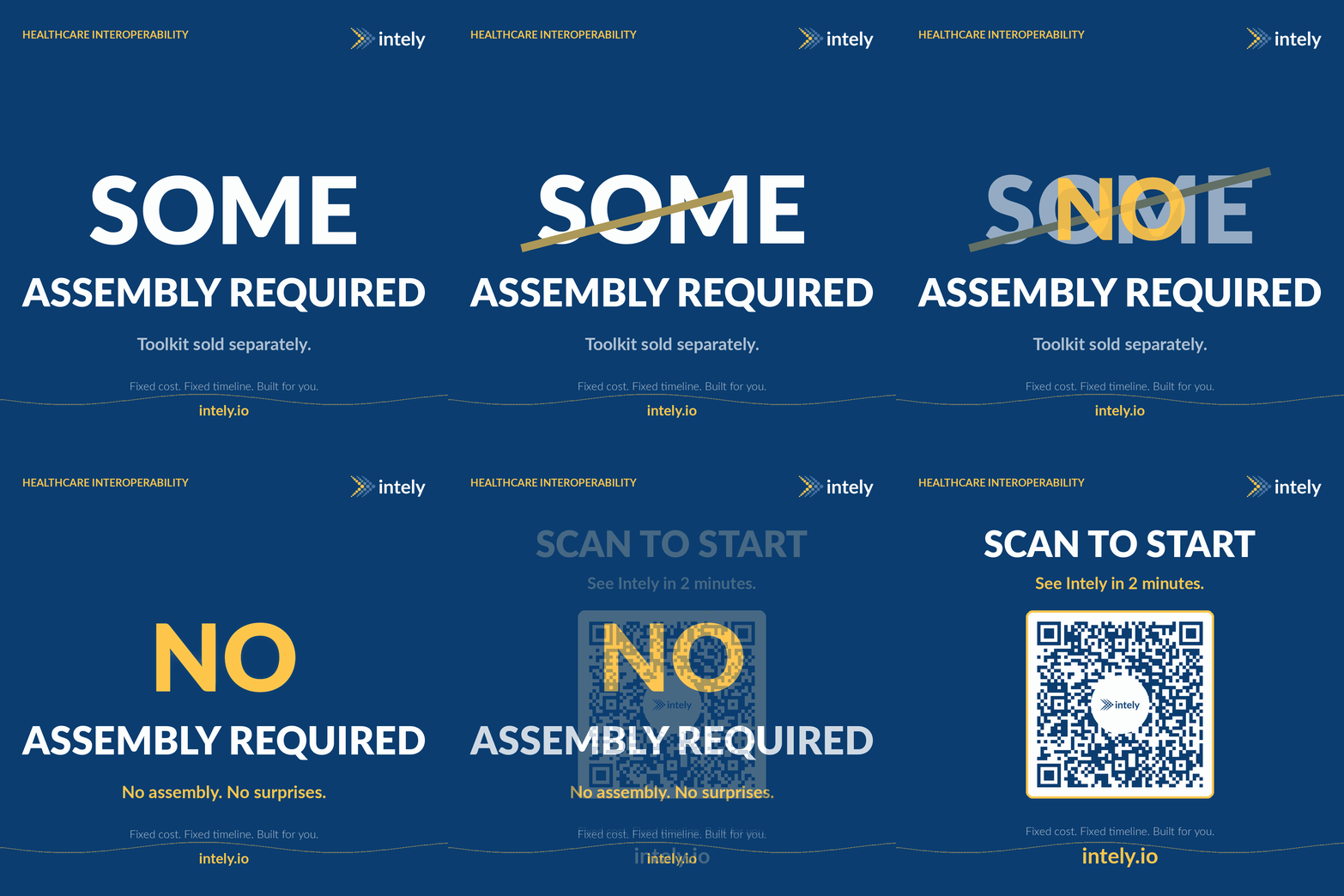
At intely.io, no assembly required.
Need to connect your application to an EMR, ERP, RIS, PACS, RCM, or anything else?
We build it. You use it.
Fixed cost. No surprises. Fixed timeline. No excuses.
What a Real Solution Actually Looks Like
A solution isn’t a platform you’re handed.
A solution is an outcome — delivered.
Here’s the Intely model:
1. We Build the Integration
HL7 v2, FHIR R4, REST, SMART-on-FHIR, flat file, proprietary APIs — whatever the system speaks.
You tell us the endpoints. We deliver a working connection.
2. Fixed Cost, Not Meter-Running
You get a number before we start.
No open-ended SOW. No “professional services” padding.
If we miss, that’s on us.
3. Weeks, Not Quarters
New site live in 4–8 weeks for standard integrations.
No endless discovery phase. No “circle back next quarter.”
Who We Built This For
The “toolkit tax” hits three groups hardest.
Digital Health, Clinical AI, and Device Vendors
Building great software. Losing months to every hospital integration.
You’ve built a great product.
Then comes reality:
Every hospital is different
Every EMR is configured differently
Every integration is a new project
Your roadmap gets hijacked by:
undocumented HL7 feeds
gated FHIR endpoints
IT queues
internal engineering work
What we do: We become your integration layer across every system.
What it means: You sell. We integrate. You go live.
Health Systems Managing M&A or EMR Consolidation
You bought the hospital. Now what about the data?
Every acquisition creates:
multiple EMRs
legacy systems
decades of data
You can’t:
migrate everything
throw anything away
What we do:
migrate what matters
archive the rest in a live, accessible format
What it means:
one patient record
compliant archive
predictable cost
Rural Providers Who Can’t Afford “Fake” Interoperability
You don’t have an IT department. You have patients.
This is the group the industry ignores.
Typical reality:
expensive platforms
no staff to run them
timelines longer than funding cycles
A platform license you can barely afford, a training program for staff you don’t have, and an implementation timeline longer than your grant cycle.
That’s not interoperability.
That’s fake interoperability.
What we do: We act as your integration team.
We connect:
EHRs
HIEs
reporting systems
partners
What it means: You focus on patients. We handle the data.
Why This Matters Now
Healthcare has been sold the same model for decades:
Buy the platform Hire the engineers Build it yourself
That worked for vendors.
It didn’t work for everyone else.
Interoperability is not a toolkit problem.
It’s a delivery problem.
Once you accept that, the model is simple:
fixed cost
fixed timeline
delivered outcome
After 30 years, it’s time someone actually fixed the car.
CTA
Stuck in the bay with a wrench in your hand?
Let’s talk.
No assembly required.
Subscribe to stay up to date
Enter your email address and we will send you the latest in health tech.
Thank you! Your submission has been received!
Oops! Something went wrong while submitting the form.

.png)